Main Content
Is the “Invasive Species Spotlight” useful to you? Let us know how.
- Introduction
- Identification
- Dispersal Methods
- Preferred Habitat and Soil Impacts
- Management and Control
- Native Alternatives
- Permitted Barberry Cultivars
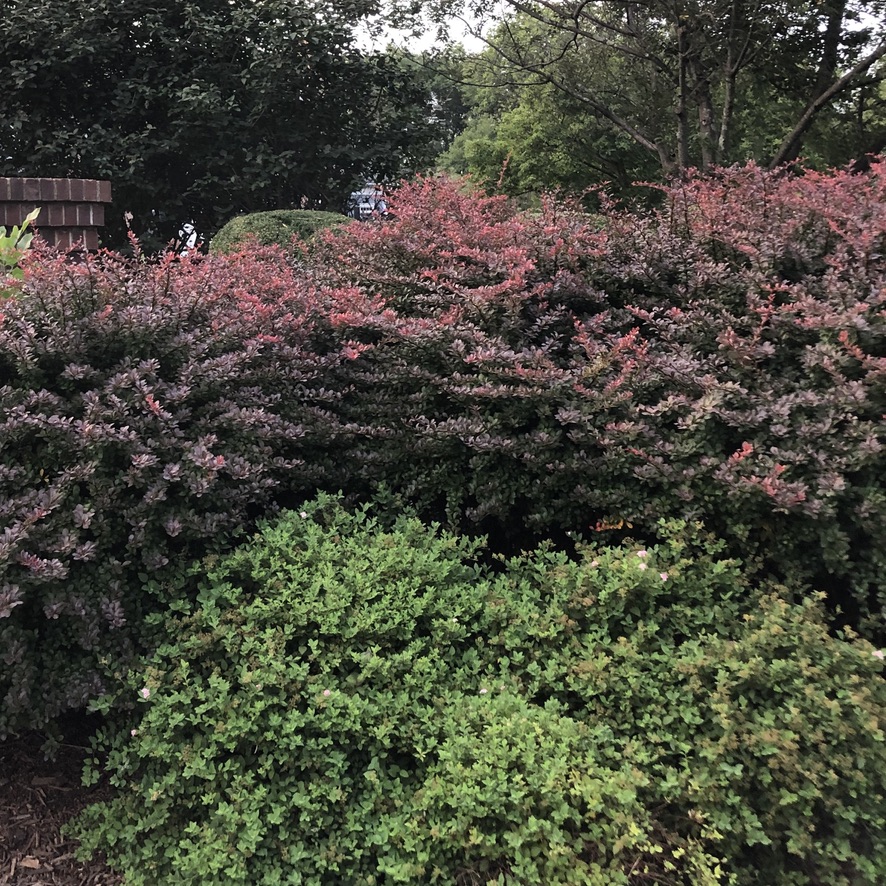
Photo: T. Maguire
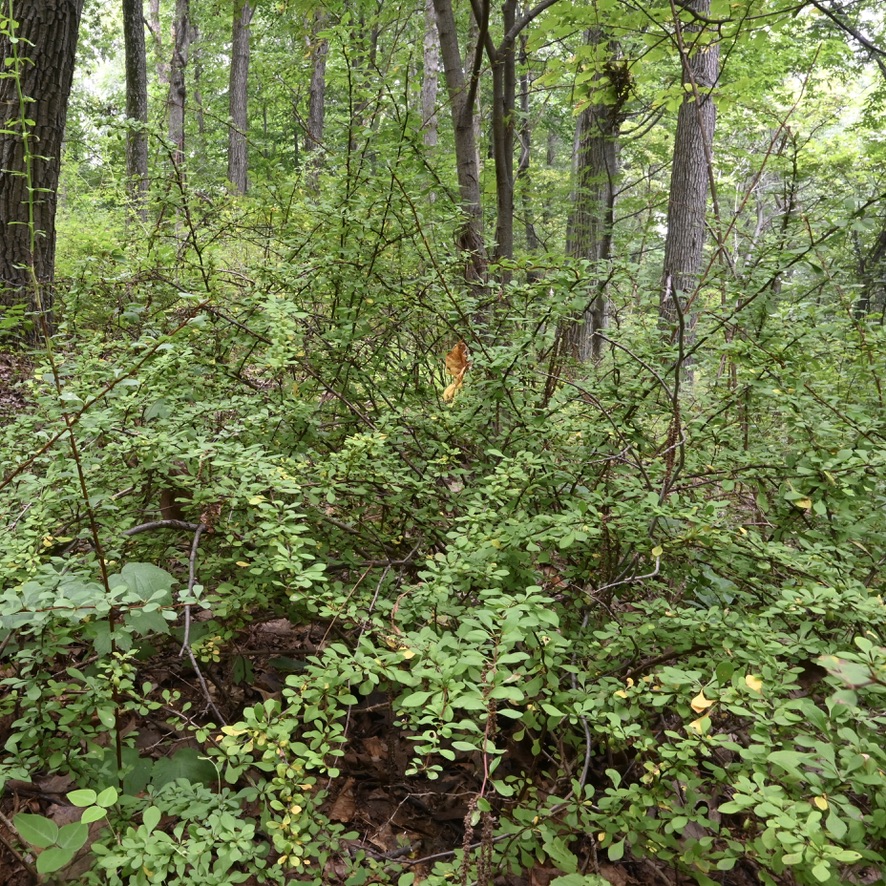
Photo: T. Maguire
1. Introduction
Japanese barberry (Berberis thunbergii) is a deciduous, multi-stemmed ornamental shrub that has escaped cultivation to become a severe threat to forest ecosystems. Promoted in the late 1800s as a hardy, disease-resistant alternative to European barberry, it grew rapidly in popularity in the nursery trade due to its easy maintenance, adaptability, and high resistance to deer browsing. This lack of deer browsing has given Japanese barbery a major competitive advantage.
Research studies suggest that the dense, low-branching habit of Japanese barberry creates a humid microclimate that favors black-legged ticks/deer ticks (Ixodes scapularis). These ticks transmit a host of tickborne illnesses including Lyme disease. Areas infested with barberry often support higher densities of Lyme-infected ticks and white-footed mice (the primary Lyme reservoir). Due to these ecological and human health hazards, many states—including Pennsylvania, Maryland, New York, Massachusetts, Maine, Minnesota, New Hampshire, West Virginia, Delaware, and more recently New Jersey—have regulated or banned the sale, propagation, and planting of Japanese barberry cultivars.
Although New Jersey has included Japanese barberry in its list of prohibited species as part of the Invasive Species Management Act, it provides exceptions for five cultivars considered to be less of an invasive threat because they produce little to no seed (more details below). Read more about the timeline for New Jersey’s Invasive Species Management Act here.
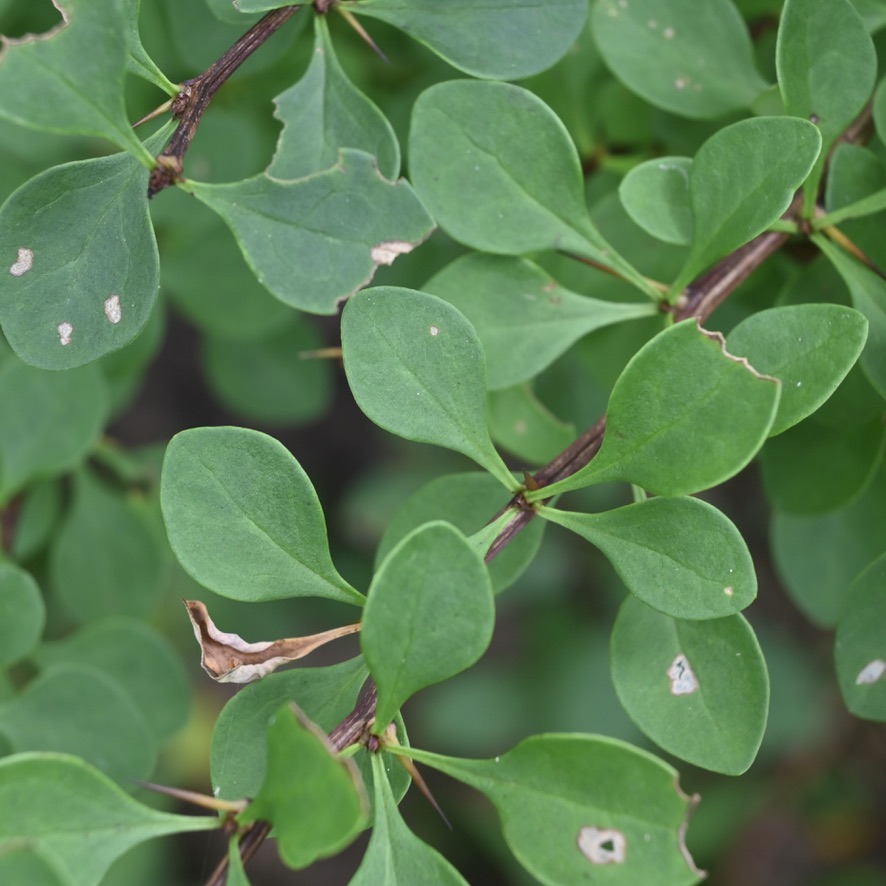
Photo: T. Maguire
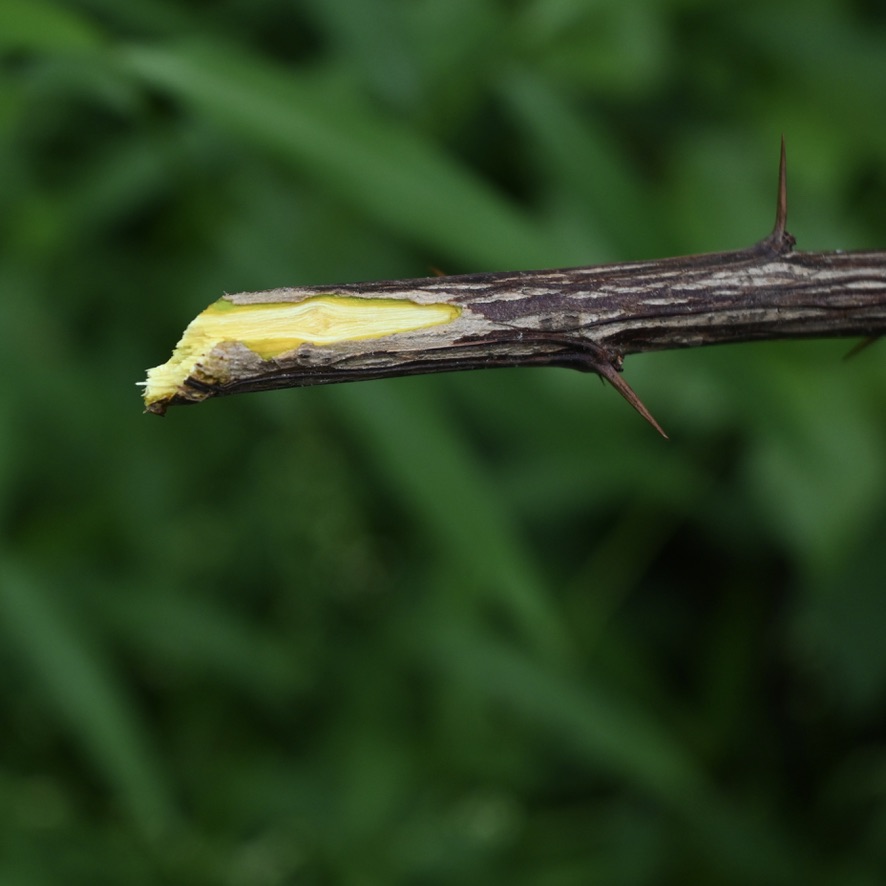
Photo: T. Maguire
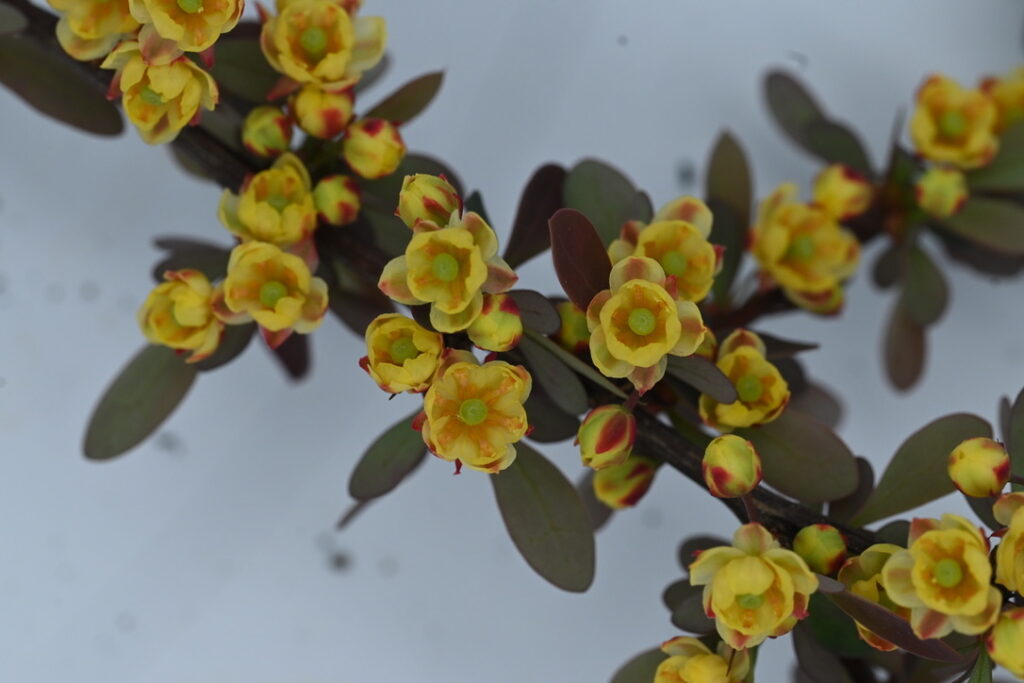
Photo: T. Maguire
2. Identification
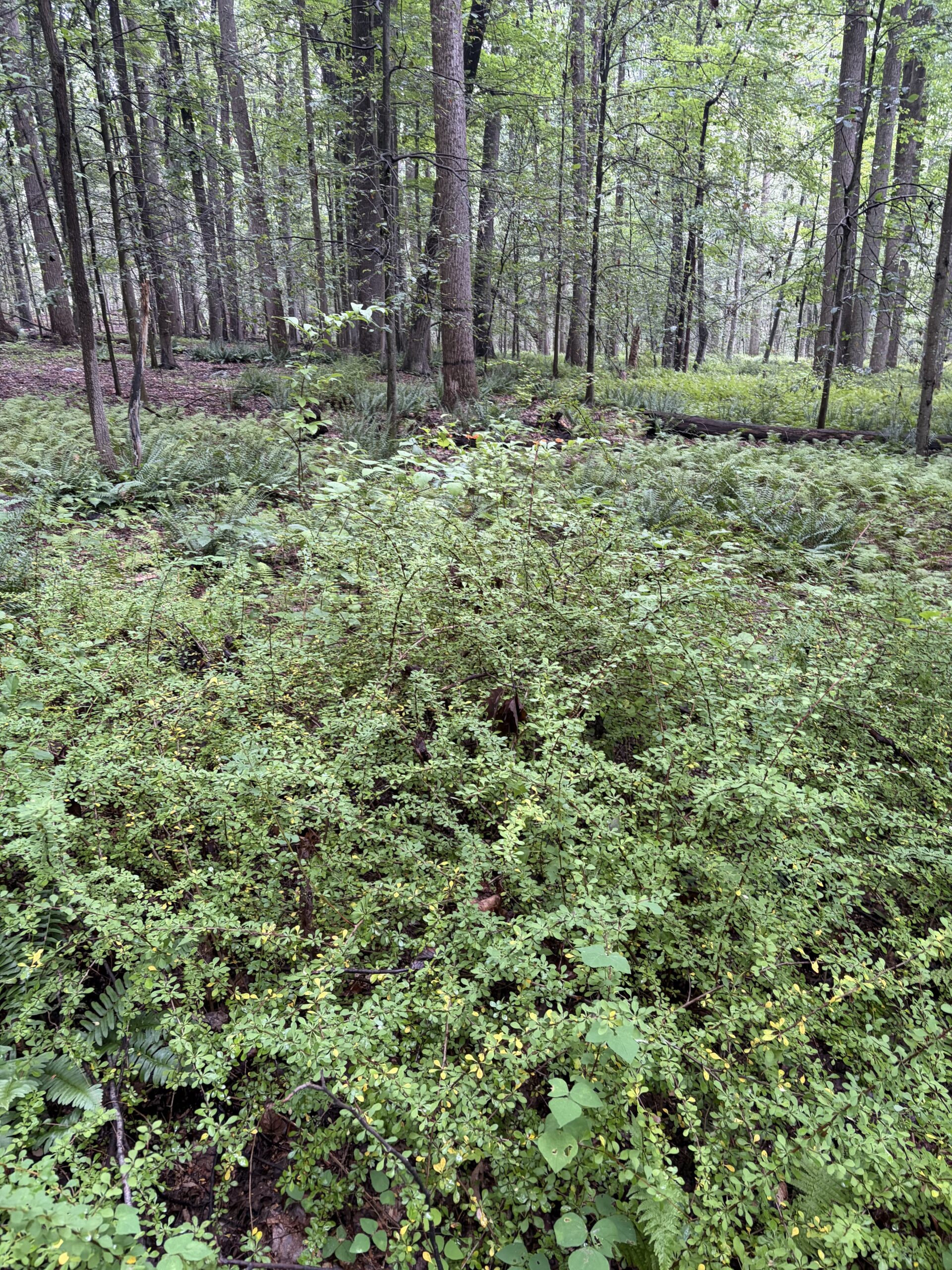
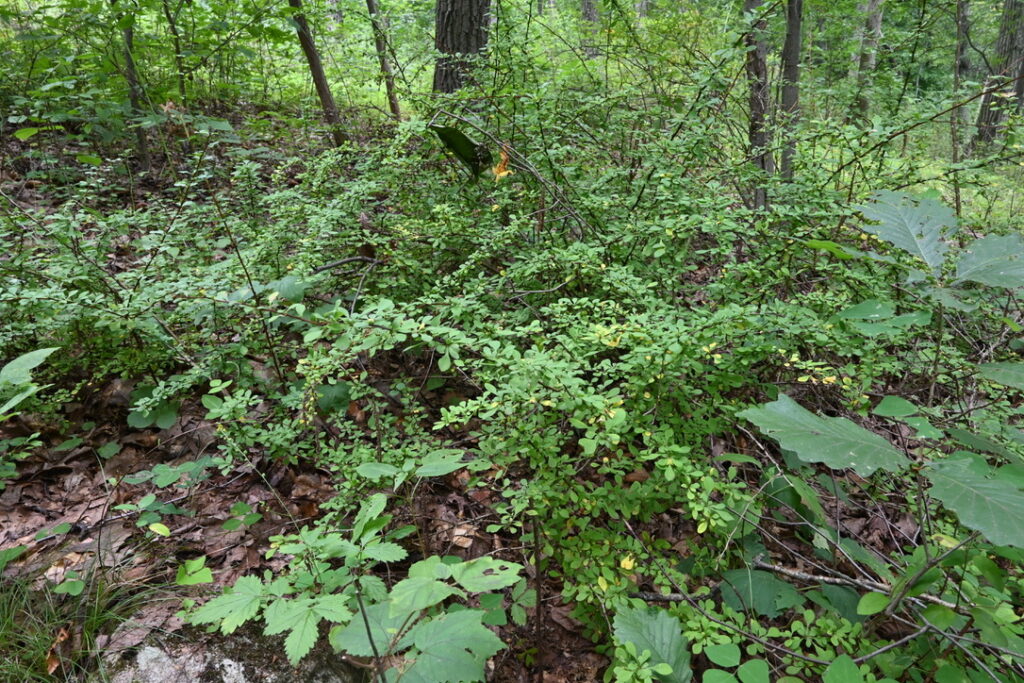
When barberry invades natural areas, particularly understory forests with dense shade, wild seedlings often revert to green leaves and develop a more spreading branch structure. The thorny stand eventually forms impenetrable thickets.
- Size and Habit: Typically grows 2 to 8 feet tall and wide, depending on genetics and light levels and site characteristics. Often found in forest understory in dense shade. Drooping branches will root where they contact the soil, forming a thorny, impenetrable, thicket.
- Leaves: Simple, alternate, growing in tight clusters. They are spoon-shaped with smooth margins and taper at the base. While landscape plants often have purple, red, or yellow-green leaves, wild forms generally revert to green. Leaves emerge much earlier in spring and drop much later in fall than native forest shrubs, making them highly visible.
- Stems and Inner Bark: Rusty brown, deeply grooved twigs armed with a sharp spine at each node. The inner wood is bright yellow.
- Flowers: Small, drooping, yellow flowers with six petals in clusters of two to four along the undersides of the branches in April.
- Fruit: In late summer and fall, flowers mature into conspicuous oval, red berries (approximately 1/4 inch long) that are readily eaten and dispersed by wildlife.
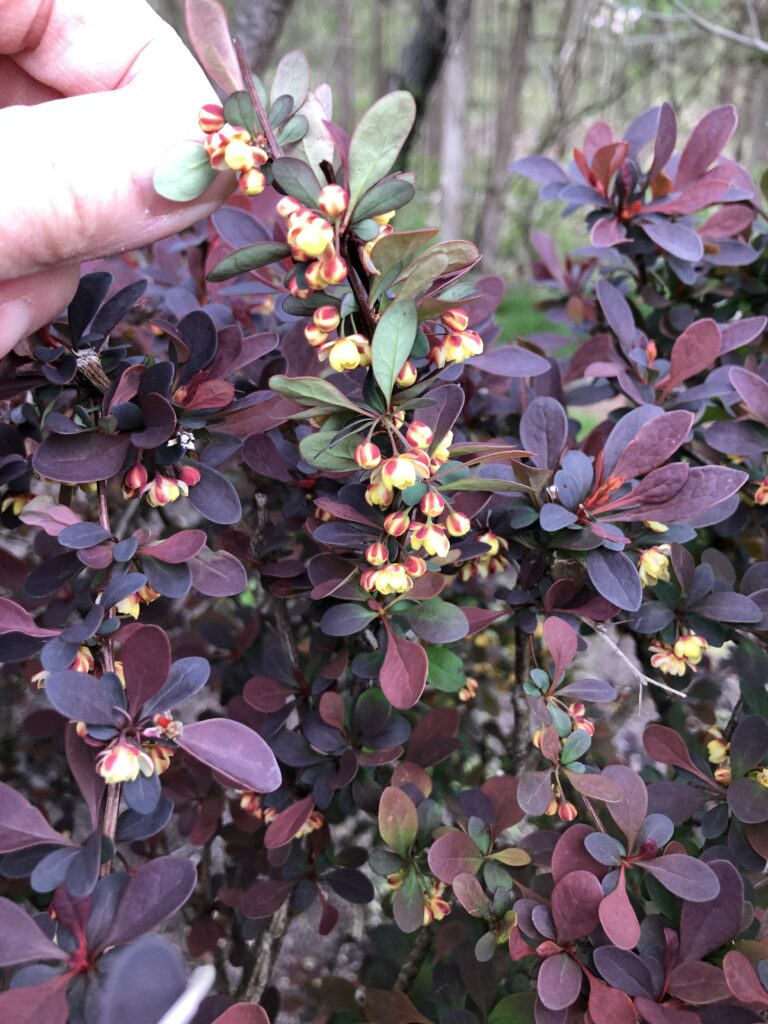
Photo: T. Maguire
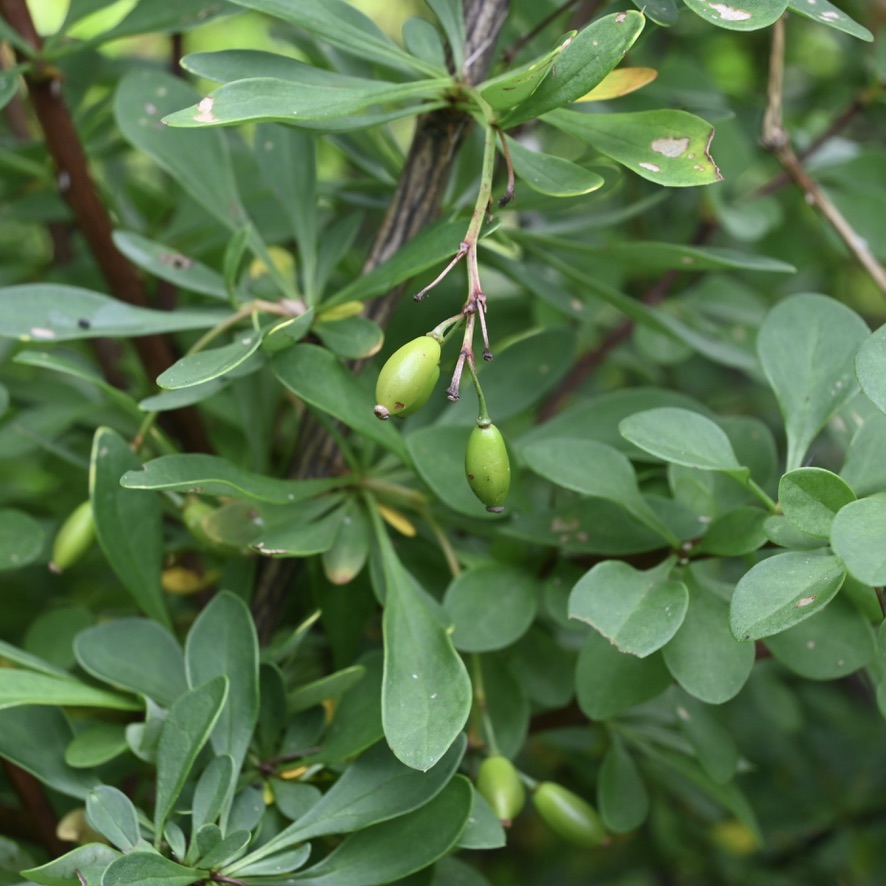
Photo: T. Maguire
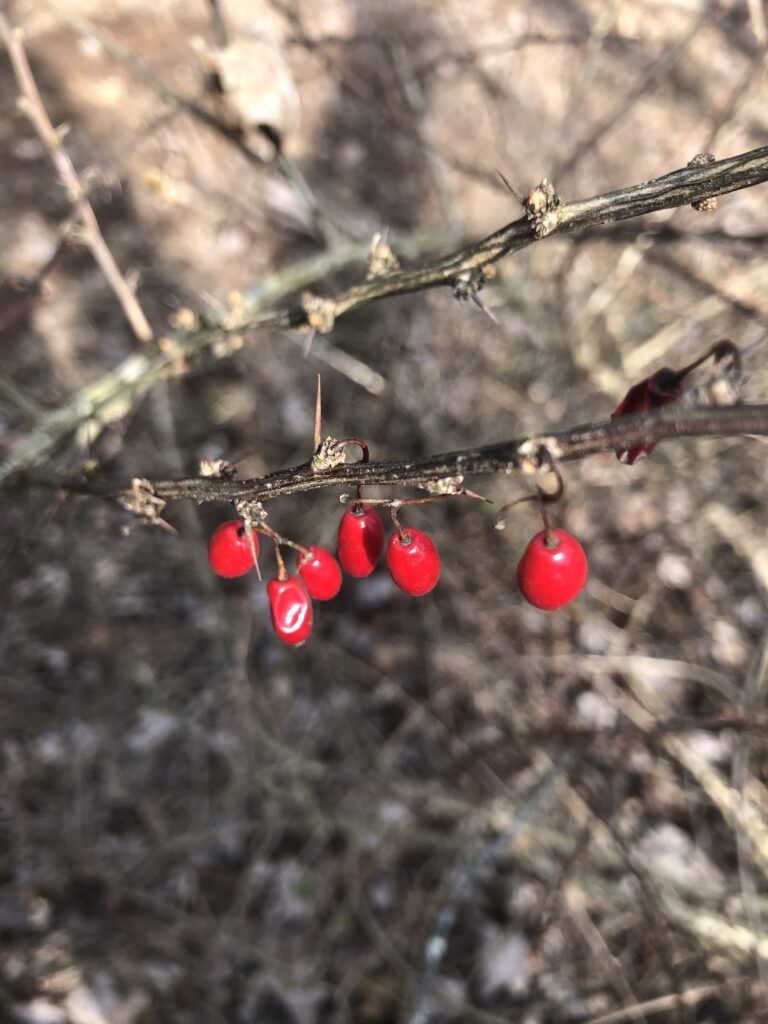
Photo: T. Maguire
3. Dispersal Methods
Japanese barberry can spread by both sexual and vegetative reproduction:
- Seed Dispersal (sexual): Mature plants can produce thousands of red berries each year. Since the red berries persist through late winter when other food sources are scarce, birds and small mammals eat them and distribute the seeds in their droppings across wide distances, creating new infestations.
- Vegetative Layering (vegetative): When drooping branches touch the ground, they can form adventitious roots and establish new clones. These rooted branches survive and grow even if severed from the parent plant.
- Rhizomes (vegetative): The shrub can also spread horizontally through underground roots (rhizomes), expanding existing barberry stands.
Photos: T. Maguire
4. Preferred Habitat and Soil Impacts
As with many invasive plants, Japanese barberry can grow in many environmental conditions. It does well in full sun through dense shade, enabling it to colonize forest understories, pastures, meadows, wetlands, and rights-of-way. Research has shown that barberry infestations alter soil dynamics. Their decomposing leaf litter changes the soil pH, making it more basic (alkaline), suppressing the growth and germination of native, spring ephemeral wildflowers.
5. Management and Control
To achieve successful long-term control, land managers should begin by working in the least-invaded areas where desirable native plant communities are still intact. This protects the “clean” areas and preserves high-value ecosystems first.
Mechanical Control
• Hand Pulling and Digging: Small seedlings can be manually pulled or dug out. Heavy-duty gloves are critical as the tips of barberry spines are very thin, causing skin irritation.
• Mowing/Cutting: When cut close to the ground barberry will resprouts from root crowns. For small infestations, repeated cuttings close to the ground with loppers can help to exhaust the root system. For large infestation, cutting alone is not effective and should only be done as a pre-treatment to chemical controls. Mowing with heavy duty equipment is useful to reduce the size of mature, large stands prior to herbicide applications. In addition, cutting barberry first and then spraying the resprouts later uses much less herbicide than spraying large shrubs.
Chemical Control (Herbicides)
Chemical treatments are highly effective because they kill the underground root system, preventing resprouting. When managing natural lands, the goal for choosing an herbicide and application technique should be a balance between the greatest treatment efficacy and least toxicity to the environment, which includes desirable, native plant communities. Always follow the herbicide label instructions; the label is the law.
The cut-stump method: Shrub are cut at ground level, and the herbicide is applied immediately to the remaining stump. This approach can be very effective for small to medium populations where the goal is to reduce collateral damage to surrounding vegetation. Avoid the spring through early summer as the cut stump method is not as effective when shrubs are actively growing vegetation. Late summer and fall are the best application time when woody plants are transporting carbohydrate reserves into their root system. Example herbicides are glyphosate or triclopyr amine. Various applicators can be used for the cut stump method including a squeeze bottle with a specialized sponge tip, a spray bottle, or a low volume backpack sprayer. If you have a large infestation, the cut stump method can be labor intensive as each shrub has many stems that all need to be treated.
Basal bark application method: This method can be used all year and involves spraying the lower 12 to 18 inches of dry stems around the entire circumference with an effective herbicide like Triclopyr ester in oil, which increases bark penetration and absorption.
Both basal bark and cut stump methods can be used in the winter when barberry is easy to recognize due to its thorns and persistent red berries.
Foliar application method: For large infestations, foliar applications when leaves are present is the least labor-intensive method using glyphosate or triclopyr. Additions of surfactants and dyes help improve coverage and the visibility of the herbicide application area.
Notes: Both basal bark and cut stump methods can be used in the winter when barberry is easy to recognize due to its thorns and persistent red berries. Post treatment, make sure to monitor the area for re-sprouts and new individuals for multiple seasons. For more information on control strategies visit Penn State Extension.
If you cannot use, or are not comfortable using herbicides, but have a barberry invasion that needs attention, hire a landscape professional that has a state-issued pesticide license and specializes in brush control or invasive plant management.
6. Native Alternatives
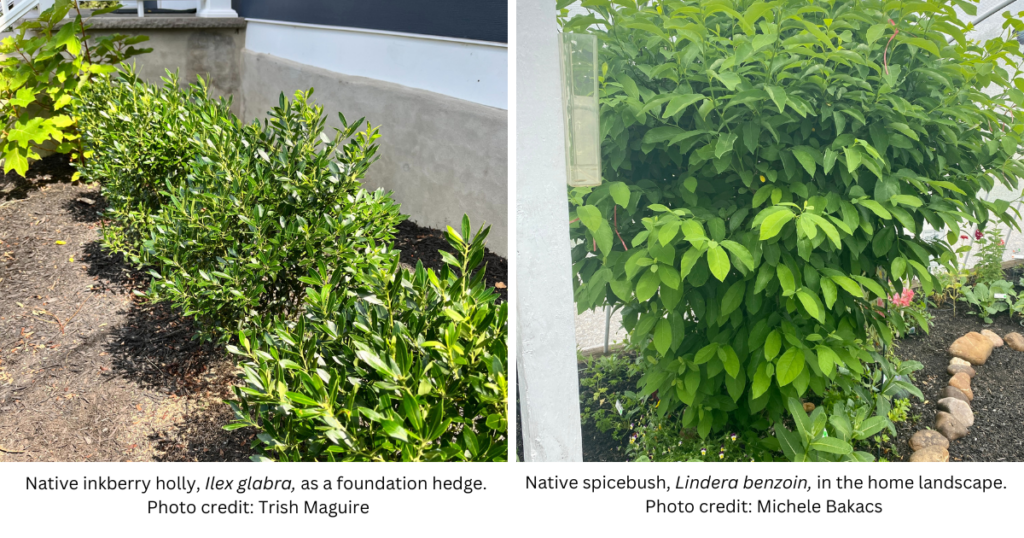
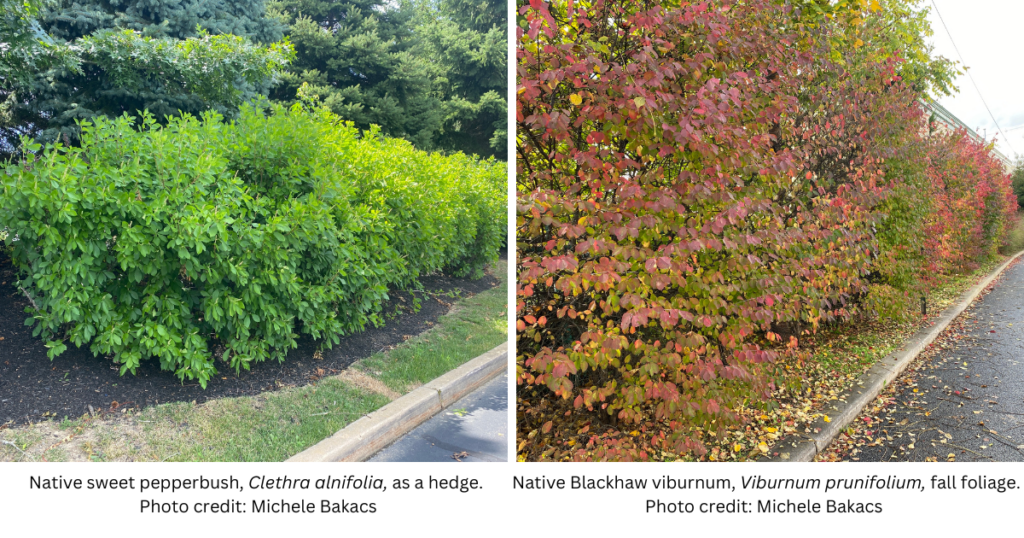
Homeowners and landscapers can replace Japanese barberry with native shrubs that provide similar aesthetic appeal (such as beautiful fall foliage or compact structure) and resilience (such as drought tolerance and deer resistance). Note that young plants will be browsed by deer and need some deer protection:
| Native Species | Characteristics | Preferred Soil & Light | Landscape Value |
|---|---|---|---|
| Northern Bayberry (Morella pensylvanica) | Semi-evergreen shrub, 5–8 ft tall. Aromatic foliage. | Dry soils; Full sun to part shade | Highly deer-resistant, salt-tolerant. Good for screens, hedges, or coastal sites. |
| Inkberry Holly (Ilex glabra) | Broadleaf evergreen, 4–8 ft tall. Small black berries. | Acidic, moist to average soil; Full sun to part shade | Durable foundation planting or evergreen hedge. Seldom severely damaged by deer |
| Highbush Blueberry (Vaccinium corymbosum) | Deciduous shrub, 6–12 ft tall. White spring blooms, edible berries. | Acidic, dry to moist soils; Full sun to part shade | Vibrant red fall foliage. High wildlife value for birds and pollinators. Occasionally severely damaged by deer. |
| Spicebush (Lindera benzoin) | Deciduous shrub, 8–12 ft tall. Yellow spring flowers, red berries. | Moist to average soil; Full sun to part shade | Fragrant foliage (lemony scent when crushed). Golden-yellow fall color and early yellow spring blooms. Seldom severely damaged by deer. |
| Virginia Sweetspire (Itea virginica) | Deciduous shrub, 3–6 ft tall. White summer blooms. | Moist to average soil; Full sun to part shade | Long-lasting reddish-purple fall color. Seldom severely damaged by deer. |
| Witch Hazel (Hamamelis virginiana) | Large shrub/small tree, 15–20 ft tall. Yellow fall blooms. | Dry to average soil; Part shade to deep shade | Blooms in late autumn when other plants are dormant. Gold/yellow fall color. Occasionally severely damaged by deer. |
| Blackhaw Viburnum (Viburnum prunifolium) | Large shrub/small tree, 12–15 ft tall. Creamy spring flowers. | Dry to moist soils; Full sun to part shade | Produces dark blue edible fruits. Good for wildlife gardens, screens, and hedges. Seldom severely damaged by deer. |
7. Permitted Barberry Cultivars
The New Jersey Invasive Species Management Act (NJISMA) provides exceptions for five barberry cultivars that are considered sterile or non-invasive. This means they produced little to no seed compared to the thousands of seeds produced by other barberry cultivars or the wild-type species. Therefore, they pose a reduced threat to local ecosystems. Recently, four patented cultivars were developed by researchers at the University of Connecticut through ploidy manipulation (changing the number of sets of chromosomes). The exempted cultivars listed in the NJISMA include:
- Aurea– a golden-leaved 3-4 ft tall cultivar that has been in the trade for decades. One study showed that over 3 years it produced on average between 90 fruit and 75 seeds.
- Crimson Cutie® (‘UCONNBTCP4N’): a low, dense, mounded cultivar with red foliage. One study showed that over 16 years it produced 30 seeds.
- Mr. Green Genes® (‘UCONNBTB039’): a low, dense, mounded cultivar with solid green leaves. One study showed that over 16 years it produced 1 seed.
- Lemon Glow® (‘UCONNBTB048’): a low, dense, mounded cultivar with yellow leaves and red leaf margins on new growth. One study showed that over 16 years it produced 1 seed.
- Lemon Cutie® (‘UCONNBTB113’): a dwarf, ultra-compact cultivar with yellow-green leaves. One study showed that over 16 years it produced 1 seed.
8. References and resources
Bakacs, M., & Errickson, W. (2023). FS1353: Invasive Plants and Native Alternatives for Landscapes. Rutgers Cooperative Extension, New Jersey Agricultural Experiment Station, Rutgers, The State University of New Jersey. Available at https://njaes.rutgers.edu/fs1353/
Brand, M. H., & Durocher, S. N. (2022). Four sterile or near-sterile cultivars of Japanese Barberry in three foliage colors. HortScience, 57(4), 581–587. https://doi.org/10.21273/HORTSCI16488-22
Carignan, C., Talabac, M., & Ricigliano, D. (2026). Japanese Barberry. University of Maryland Extension, College of Agriculture and Natural Resources. Available at https://extension.umd.edu/resource/japanese-barberry
Charles B. Lubelczyk, Susan P. Elias, Peter W. Rand, Mary S. Holman, Eleanor H. Lacombe, Robert P. Smith, Habitat Associations of Ixodes scapularis (Acari: Ixodidae) in Maine, Environmental Entomology, Volume 33, Issue 4, 1 August 2004, Pages 900–906, https://doi.org/10.1603/0046-225X-33.4.900
Contreras, Ryan. (2022) Breeding for Non-Invasive Nursery Crops: Status of Cultivars and Regulation. Department of Horticultural, Oregon State University. Available at: https://ipps.org/wp-content/uploads/2025/05/4j_er_contreras_2022.pdf
Ehrenfeld, J.G., Kourtev, P. and Huang, W. (2001) Changes in Soil Functions Following Invasions of Exotic Understory Plants in Deciduous Forests. Ecological Applications, 11: 1287-1300. https://doi.org/10.1890/1051-0761(2001)011[1287:CISFFI]2.0.CO;2
Jonathan M. Lehrer, and Mark H. Brand. J. Environ. Hort. 28(3):187–189. September 2010 Purple-leaved Japanese Barberry (var. atropurpurea) Genotypes Become Visually Indistinguishable from Green-leaved Genotypes (Berberis thunbergii DC.) at Low Light Levels.
Lehrer, J. M., Brand, M. H., & Lubell, J. D. (2006). Four Cultivars of Japanese Barberry Demonstrate Differential Reproductive Potential under Landscape Conditions. HortScience, 41(3), 762–767. https://doi.org/10.21273/HORTSCI.41.3.762
Scott C. Williams, Jeffrey S. Ward, Effects of Japanese Barberry (Ranunculales: Berberidaceae) Removal and Resulting Microclimatic Changes on Ixodes scapularis (Acari: Ixodidae) Abundances in Connecticut, Usa, Environmental Entomology, Volume 39, Issue 6, 1 December 2010, Pages 1911–1921, https://doi-org.proxy.libraries.rutgers.edu/10.1603/EN10131
Templeton, S., Gover, A., Jackson, D., & Wurzbacher, S. (2025). Japanese Barberry. Penn State Extension, College of Agricultural Sciences, The Pennsylvania State University. Available at https://extension.psu.edu/japanese-barberry
Williams SC, Ward JS, Worthley TE, Stafford KC 3rd. Managing Japanese barberry (Ranunculales: Berberidaceae) infestations reduces blacklegged tick (Acari: Ixodidae) abundance and infection prevalence with Borrelia burgdorferi (Spirochaetales: Spirochaetaceae). Environ Entomol. 2009 Aug;38(4):977-84. doi: 10.1603/022.038.0404. PMID: 19689875.
Thank you to our reviewers:
Sarah Katzenbach, Supervising Entomologist, Division of Plant Industry, NJ Department of Agriculture
Timothy James Waller, Ph.D. Agricultural Agent lll – Rutgers Cooperative Extension of Cumberland County, County Extension Department Head (CEDH)
The goal of Rutgers Cooperative Extension’s “Invasive Species of the Month” is to highlight those organisms that are non-native to New Jersey and cause economic or environmental harm or harm to human health. We can all help prevent the spread of invasives by learning which species are a threat to our ecosystems.