Main Content
Is the “Invasive Species Spotlight” useful to you? Let us know how.
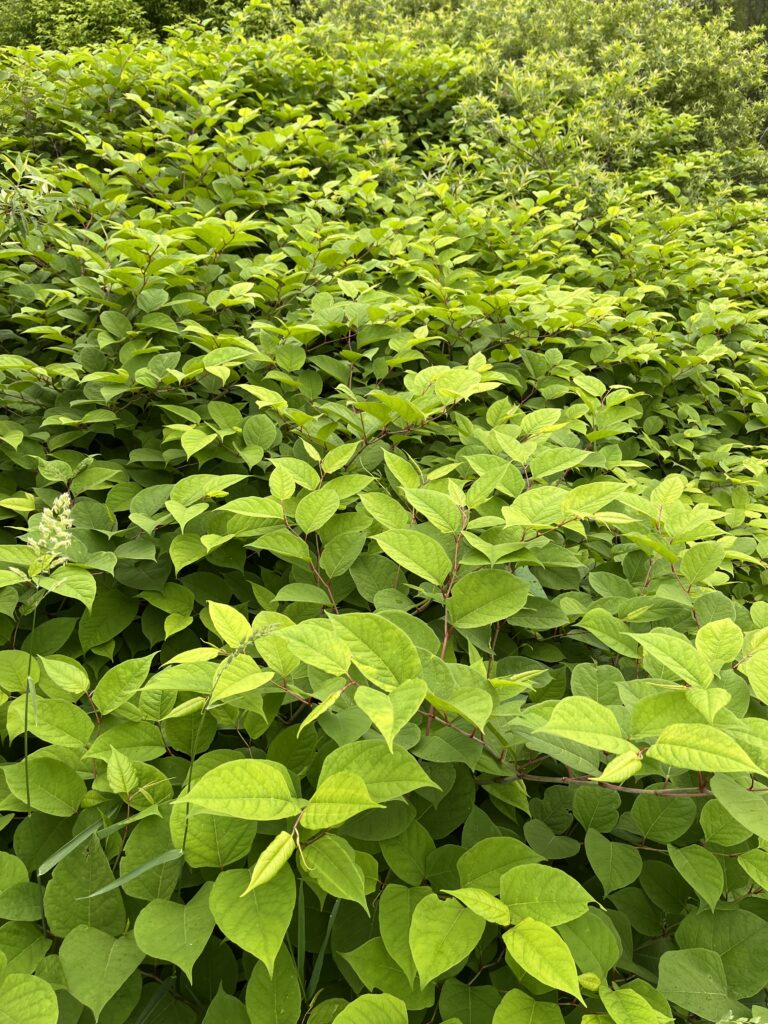
Photo: T. Maguire
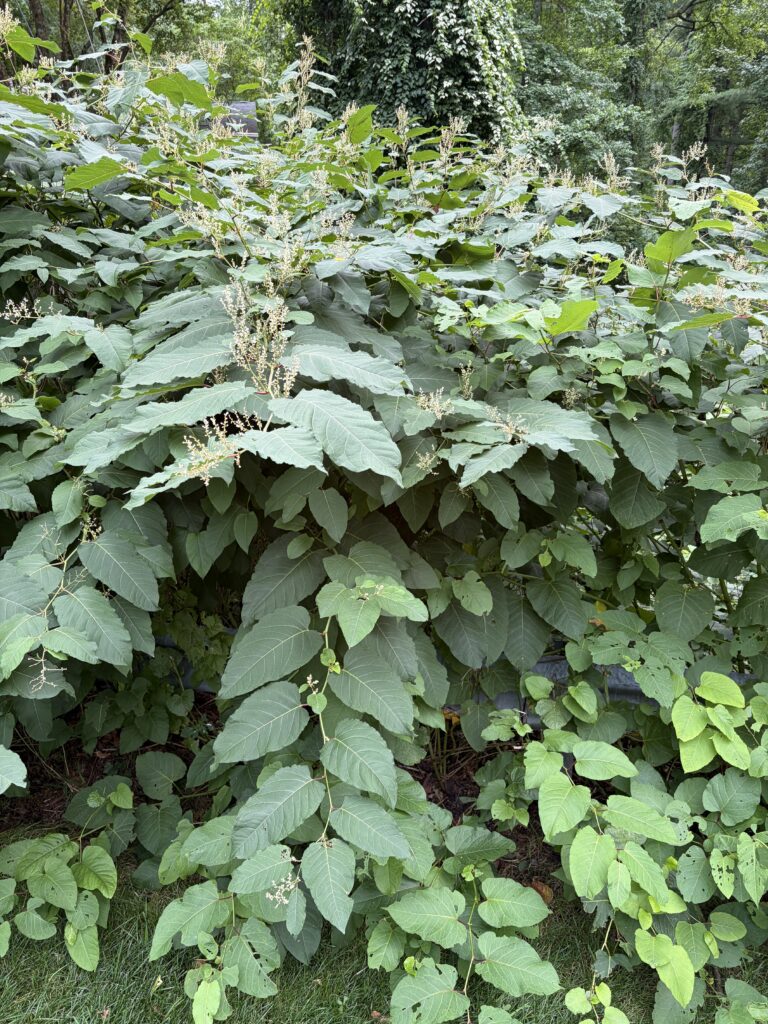
Photo: T. Maguire
Japanese knotweed (Reynoutria japonica) and its close relative, giant knotweed (Reynoutria sachalinensis), are aggressive perennials with a dense shrubby growth habit. Both species can reproduce underground through horizontal roots and adapt to a wide range of habitats, making them among the most difficult invasive plants to eradicate. Manual control is limited to small populations. For large populations, an integrated approach of cutting knotweed to the ground in June or July and following up 8 weeks later with an herbicide application is an effective way to control its spread. Knotweed was introduced into North America in the late 1800s as a horticultural plant. By the 1930s, it was already considered a nuisance and was documented in 1990 as a serious environmental threat. Knotweed is now considered one of the most invasive plants globally.
Identification
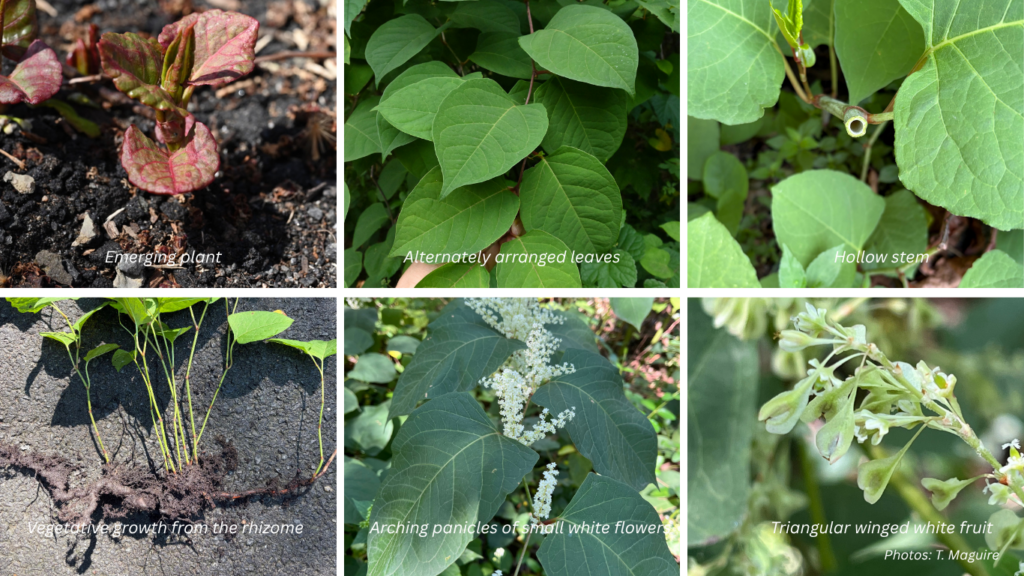
Young plants often have a reddish appearance with small arrow-shaped leaves emerging. As the plant grows, the leaves become green, 4-6 inches and spade-shaped (R. japonica) or 6-12 inches and elongated heart-shaped (R. sachalinensis). Leaves are alternately spaced on a red-speckled zigzag stem. Knotweed typically grows to 8 feet, while giant knotweed can grow to 16 feet. The two species have been known to hybridize (R. × bohemica). The stems grow in an arching form and are green or reddish and hollow. Leaves and side shoots emerge from reddish nodes at the joints.
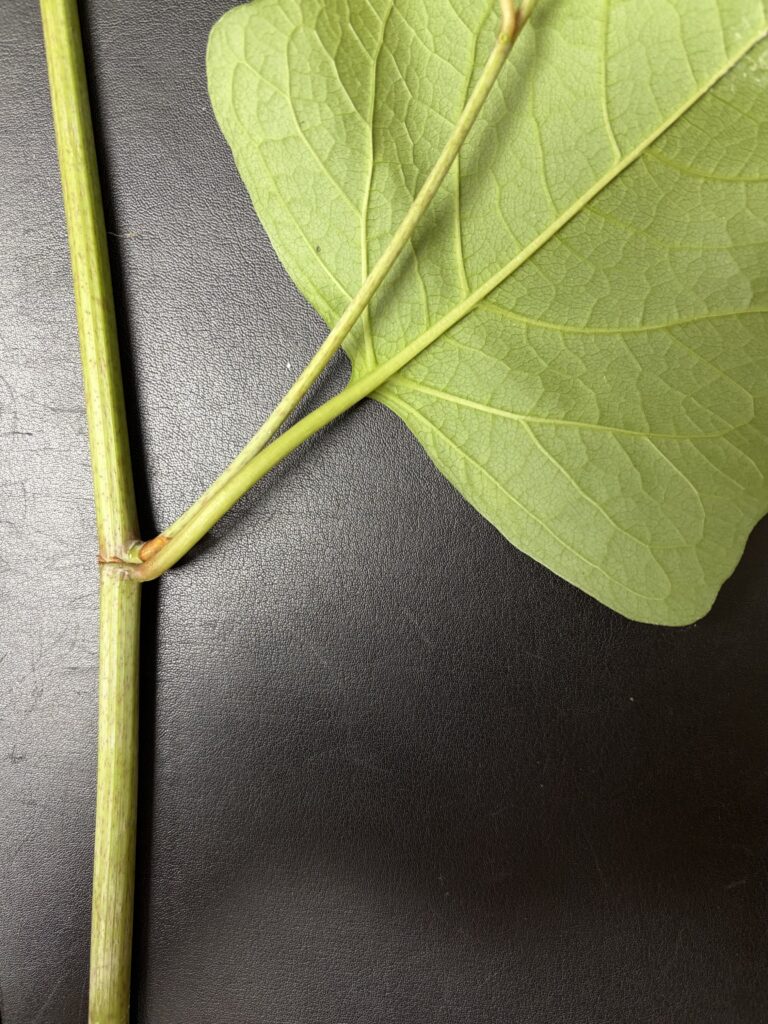
Photo: T. Maguire
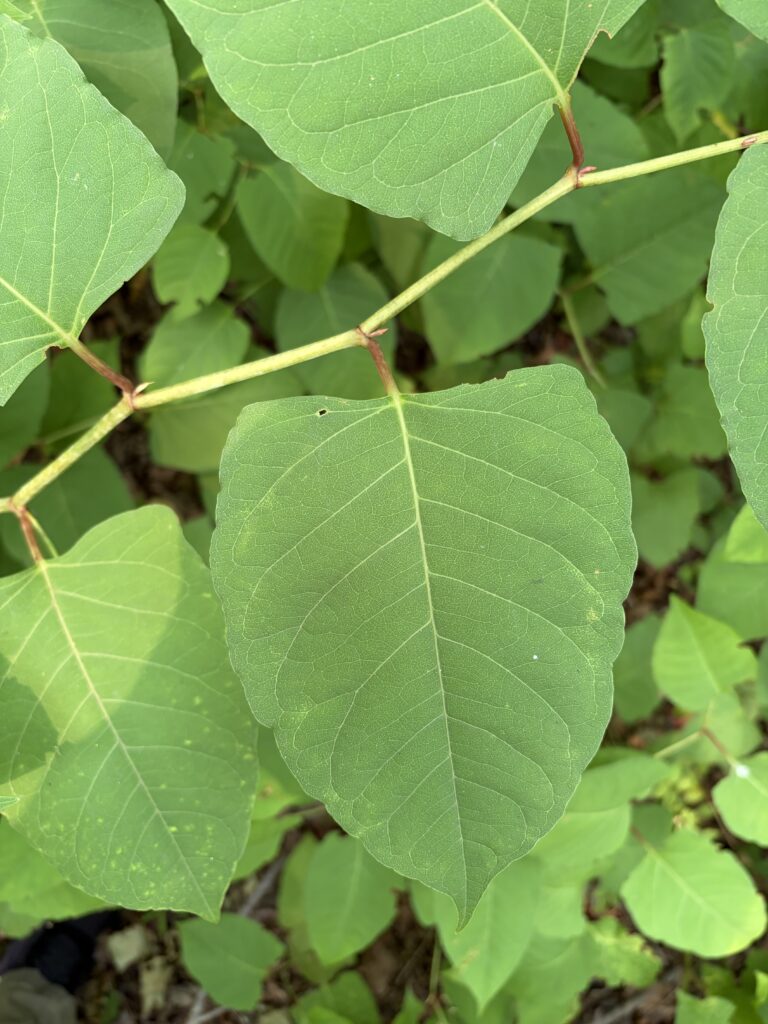
Photo: T. Maguire
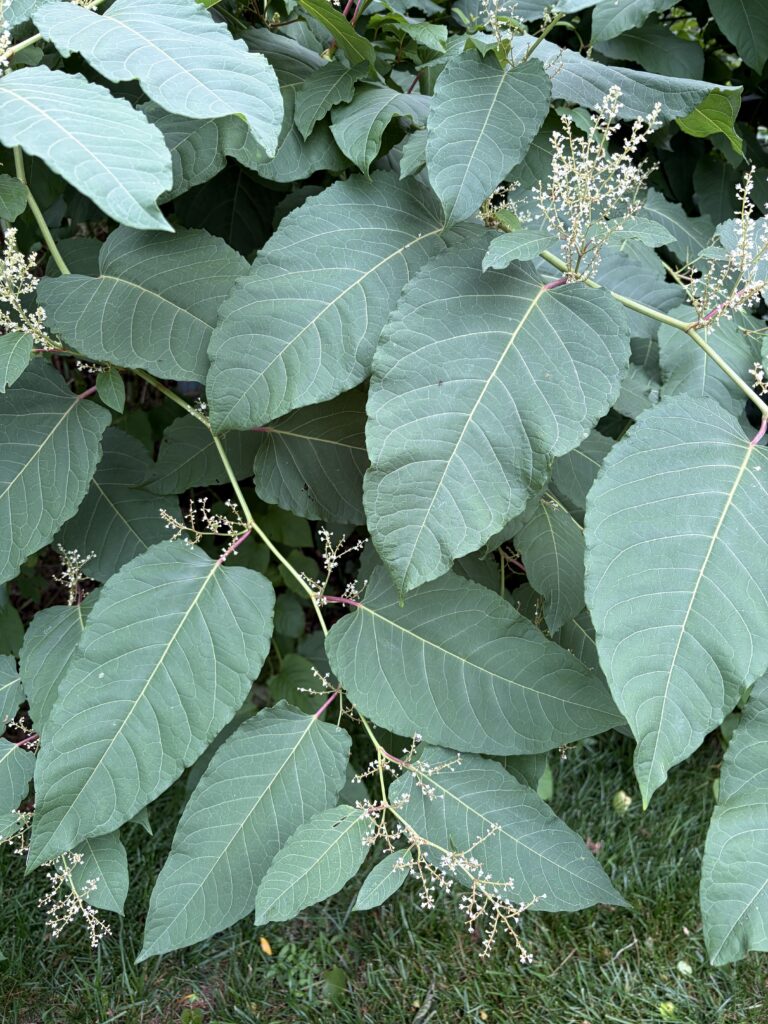
Photo: T. Maguire
In late summer, small white five-petaled flowers appear in clusters sprouting from leaf axils. The arching flower panicles are abundant and fragrant. Triangular winged white fruit is set in early fall. The winged appendages on the seed help with wind and water dispersal.
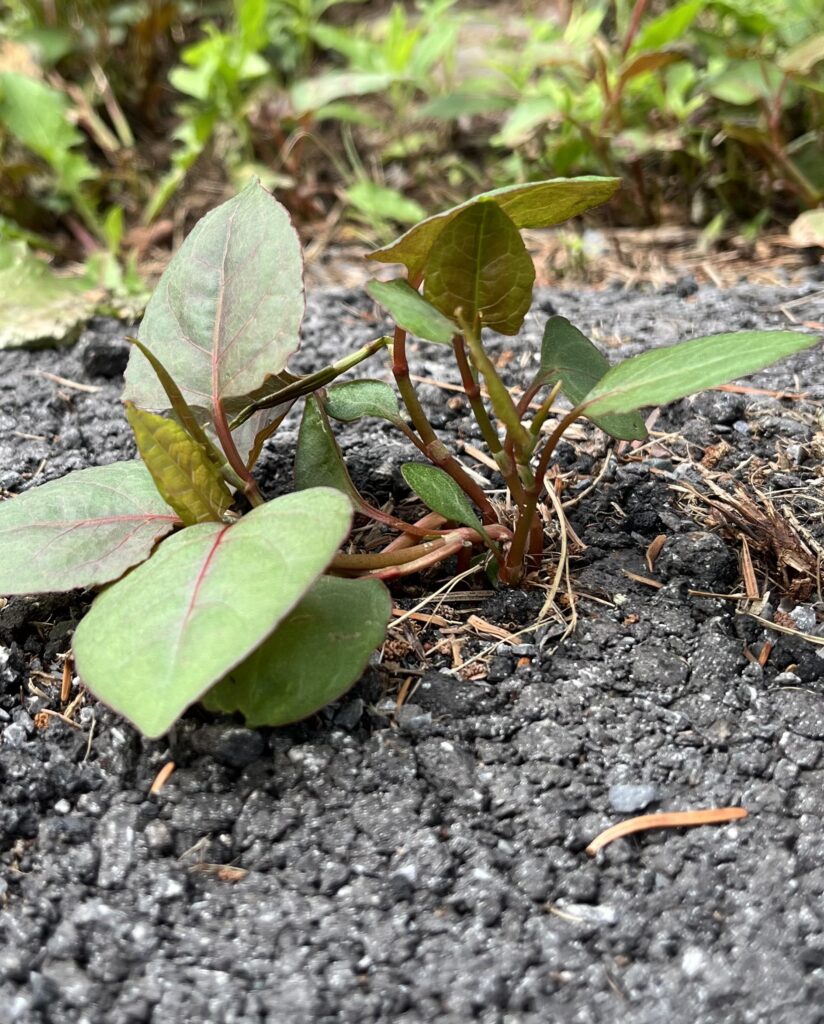
Photo: T. Maguire
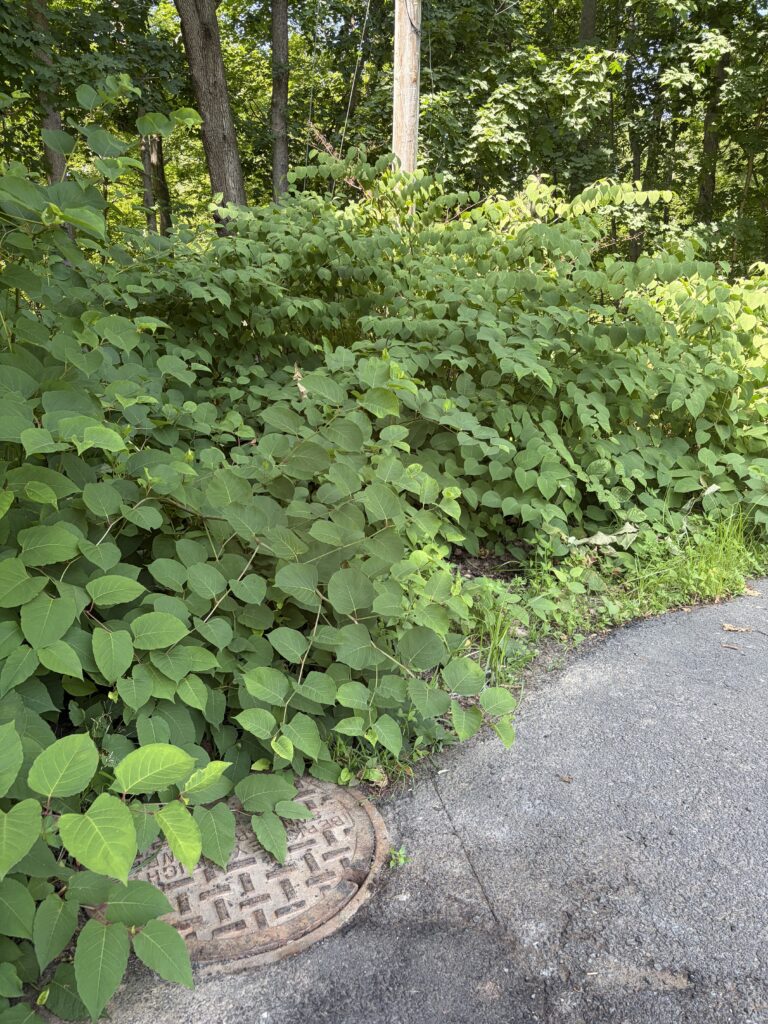
Photo: T. Maguire
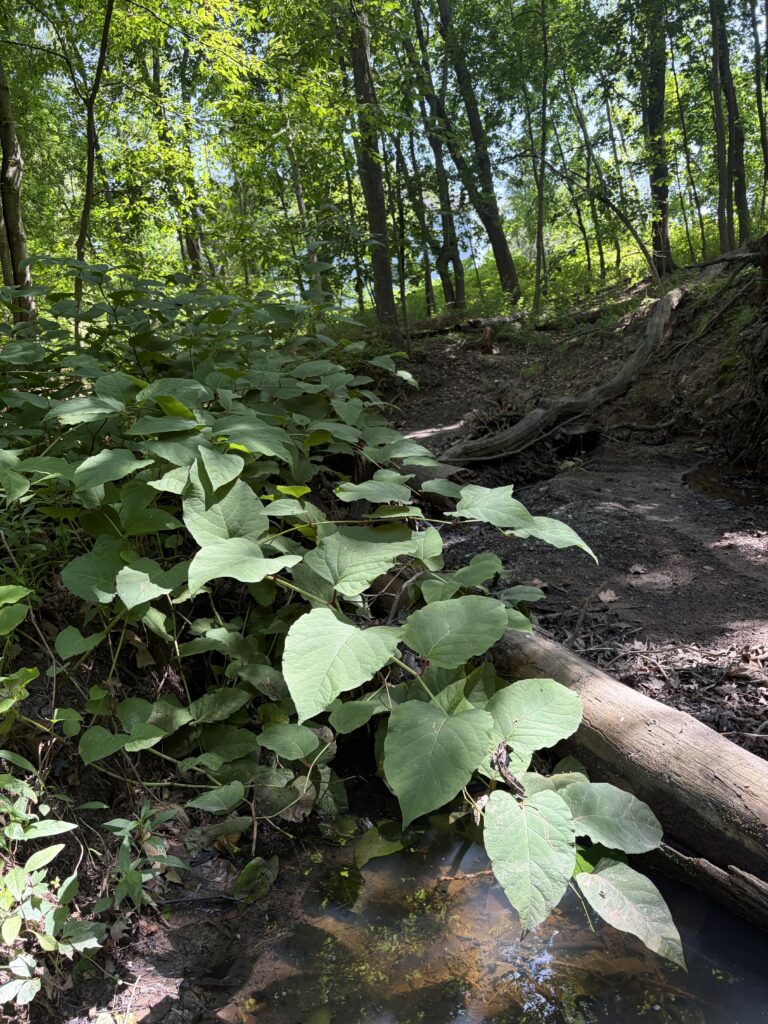
Photo: T. Maguire
Ecological Threat
Forming dense thickets, invasive knotweed prevents the growth of valuable native plant species by creating shade, changing the structure and nutrients in the soil and releasing chemical compounds that inhibit the growth of other plants. Whitetail deer typically avoid knotweed giving it even more of an advantage. The heavy competition reduces the population and success of native plants which in turn, reduces food, shelter and breeding conditions for wildlife and the organisms that rely on those resources to survive.
Knotweed also contributes to soil erosion because it lacks the network of fine surface roots that many native plants have which stabilize and hold soil in place. Increased erosion can lead to higher sediment loads in waterways, degraded water quality, streambank instability, and an increased risk of flooding.
As it spreads and grows, invasive knotweed is also known to break through concrete and asphalt, causing damage to driveways, roads, parking lots, sidewalks and building foundations which result in costly repairs.
Method of Spread
Although knotweed produces an abundance of seeds that can be carried by wind or water, the primary method of spread is through the root system. The network of underground rhizomes quickly produces a massive, dense colony of plants that are strongly embedded in the soil. The roots tolerate being cut or disturbed and quickly grow clones of the parent plant. Root fragments can reestablish themselves in a new location if moved by humans or nature. Flooding is one of the main contributors to the spread of knotweed along streambanks. As flooding frequency and intensity increase with climate change, studies show knotweed patches also expand at an increased rate along watercourses. (Colleran et.al., 2017)
Preferred Habitat
Knotweed thrives in a range of habitats, including disturbed areas, roadsides, riparian zones and urban landscapes. It prefers full sun but can tolerate shade and will grow in a variety of soil types including wet, dry and high salinity soils.
Control methods
Early detection rapid response is the most effective way of reducing the further spread of knotweed, particularly after storms and flooding. Learn to recognize knotweed seedlings when they first emerge and immediately pull them out, including the entire root.
Mechanical: Some residents have reported that small or emerging populations can be managed with repeated mowing or cutting efforts for several years without the use of pesticides. Cut the stems below the lowest node three times a year, May, mid July and late August before blooming. Dispose of plant material in heavy duty contractor bags and throw it away in the trash. Repeat this process for at least 3 years. Adding solarization techniques, such as covering the area in thick black plastic, is another technique used when herbicide application is not possible.
Chemical: The most effective way to treat knotweed is through vigilance and timing. Be prepared to monitor and control this species for multiple years. In June or July, cut down the knotweed as described above. After cutting, wait 8 weeks for the plant to grow back. Penn State Extension notes that the 8-week waiting period is critical before applying herbicides in order for the chemical to effectively translocate into the root system. Cutting is also helpful, as the regrowth is typically 2-5 feet high allowing the applicator to avoid spraying herbicide overhead. Monitor the site annually and chemically treat resprouts.
Various herbicides are effective for foliar application including glyphosate or imazapyr. When treating near water make sure to use an aquatic-labelled product. This Penn State Extension article from Grover et al. 2020 has additional information about chemical application and management timing.
If herbicide use is not feasible or is needed for management on public land, hire a landscape professional who holds a New Jersey pesticide license and specializes in invasive plant management. Note that an aquatic pesticide license is necessary for professionals working in wetland environments.
Re-planting native species
It is critical along waterways to replant with native plants that can tolerate frequent inundation and help stabilize the streambank or shoreline. Many native shrubs are adapted to and grow quickly in these high flood environments such as red-osier dogwood (Cornus sericea), silky dogwood (Cornus amomum), willows (Salix spp.), buttonbush (Cephalanthus occidentalis), alders (Aluns spp.), or sweet pepperbush (Clethra alnifolia). Native trees that do well in riparian environments include pin oaks (Quercus palustris), swamp white oak (Quercus bicolor), silver maple (Acer saccharinum) and sycamore (Platanus occidentalis).
Continue to monitor as the native plants establish, pulling or spot–treating any emerging knotweed from the planted area.
Thank you to our reviewers:
R.J. Curcio, Certified Ecologist, ESA Environmental Specialist, Natural & Historic Resources Monmouth County Park System
Jean Epiphan, Agriculture & Natural Resources Agent | Assistant Professor Rutgers Cooperative Extension of Morris County
References and Resources
- Colleran BP, Goodall KE. In Situ Growth and Rapid Response Management of Flood-Dispersed Japanese Knotweed (Fallopia japonica). Invasive Plant Science and Management. 2014;7(1):84-92. doi:10.1614/IPSM-D-13-00027.1 https://www.cambridge.org/core/journals/invasive-plant-science-and-management/article/abs/in-situ-growth-and-rapid-response-management-of-flooddispersed-japanese-knotweed-fallopia-japonica/9CAFB22C7C97D8100FF64EEABE9E359D?utm_campaign=shareaholic&utm_medium=copy_link&utm_source=bookmark
- Demian, S., Anderson, A., Braithwaite, J. et al. Implications of extreme flooding events for dispersal of Reynoutria spp. (knotweeds) in the wake of climate change. Biol Invasions 28, 19 (2026). https://doi.org/10.1007/s10530-025-03740-z https://link.springer.com/article/10.1007/s10530-025-03740-z
- Penn State Extension: https://extension.psu.edu/japanese-knotweed
- EDD MapS: https://www.eddmaps.org/species/subject.cfm?sub=19655
- Invasive Plant Atlas of the United States: https://www.invasiveplantatlas.org/subject.html?sub=19655
- University of Connecticut College of Agriculture, Health and Natural Resources: https://ipm.cahnr.uconn.edu/invasive_plants_japanese_knotweed
- Invasive Species Centre: https://www.invasivespeciescentre.ca/invasive-species/meet-the-species/invasive-plants/japanese-knotweed/
The goal of Rutgers Cooperative Extension’s “Invasive Species of the Month” is to highlight those organisms that are non-native to New Jersey and cause economic or environmental harm or harm to human health. We can all help prevent the spread of invasives by learning which species are a threat to our ecosystems.