Main Content
Is the “Invasive Species Spotlight” useful to you? Let us know how.
Hesperis matronalis

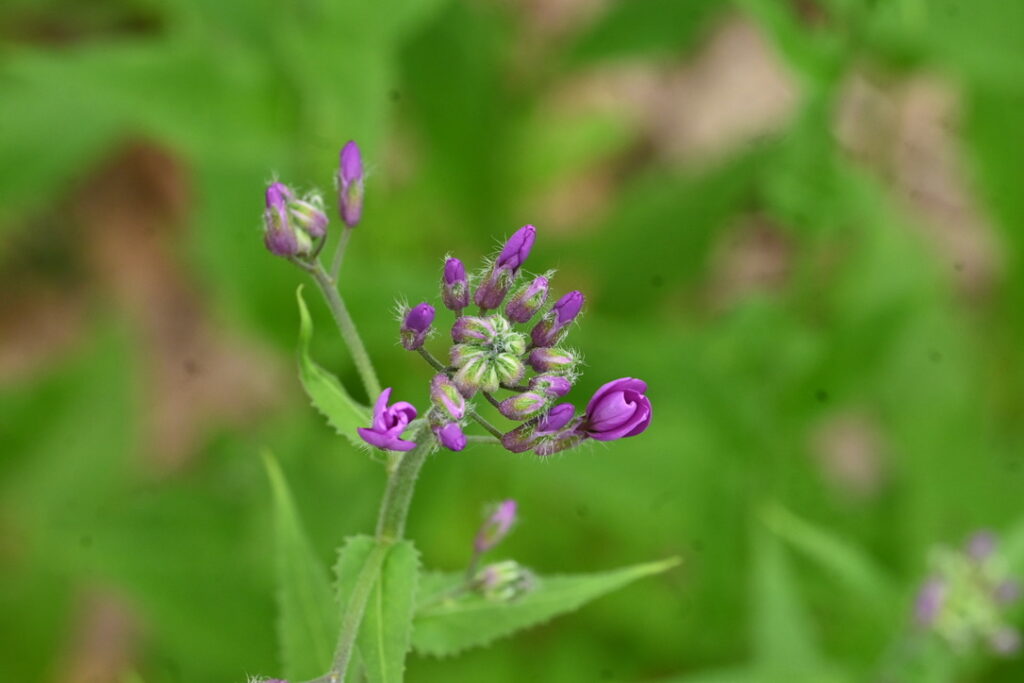
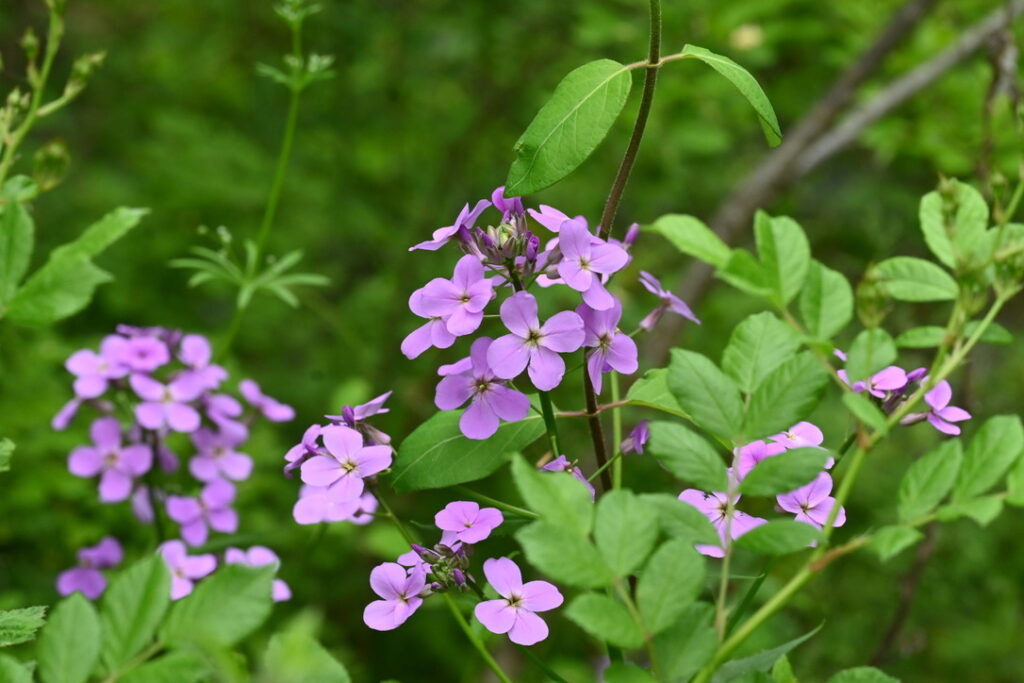
Photos: T. Maguire
Dame’s Rocket (Hesperis matronalis) is a 2-3 foot tall flowering biennial often found along moist roadsides and wooded areas. Its erect, multi-stemmed structure and purple/pink flowers resemble native eastern blue phlox (Phlox divaricata) and therefore often misidentified as native. Dame’s rocket was introduced to the US in the 1600’s as a garden plant; however, its success invading the wild is largely due to its popularity in commercial wildflower mixes sold for meadow and roadside seeding projects.
Identification:
Dame’s rocket is in the mustard family. Identifying features of the mustard family include the four-petal flowers and biennial nature. Leaves are broadly lanceolate (long, coming to a sharp point at the tip), with a rough surface, toothed edge, and arranged alternately on the stem. In its first year, only the rosette of basal leaves is present, which can remain semi-evergreen through winter. In its second year, the plant grows tall and blooms, producing clusters of four-petaled flowers ranging from white to purple in the late spring. The flowers are distinctly fragrant at dusk. Soon after flowering, 2-4 inch slender fruits (siliques) are borne filled with many seeds. The pod ripens and bursts open, dispersing the seeds into the surrounding soil.
Dame’s rocket is often confused with native phlox, but can be easily distinguished by two key features:
- Dame’s rocket has 4-petaled flowers, alternately arranged serrated leaves, and a hairy stem.
- Phlox has 5-petaled flowers, oppositely arranged leaves with smooth edges, and a smooth stem.
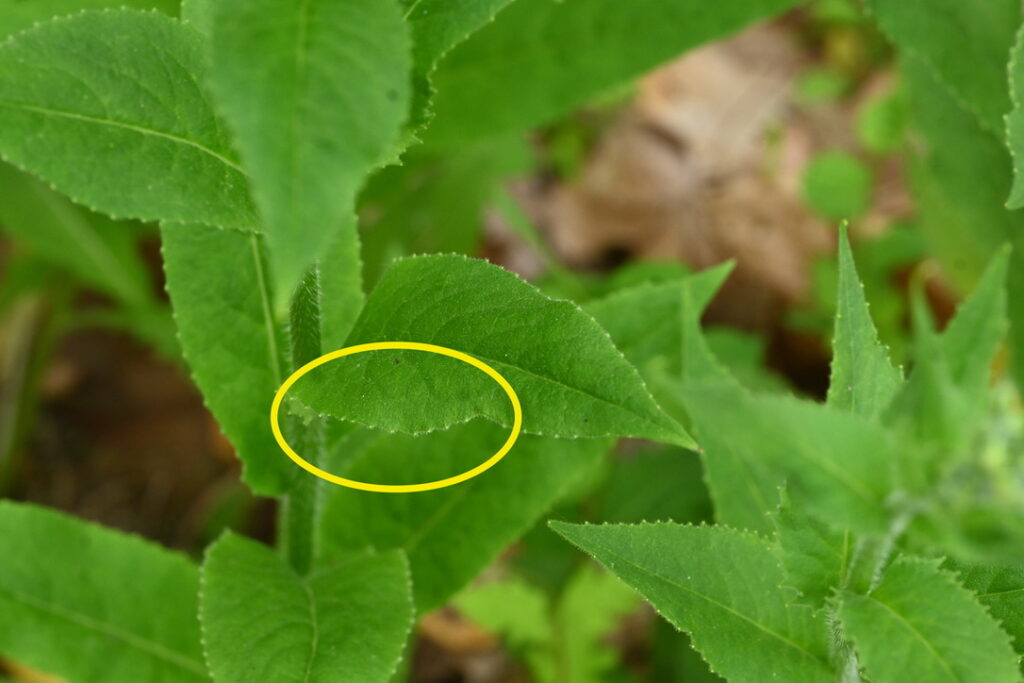
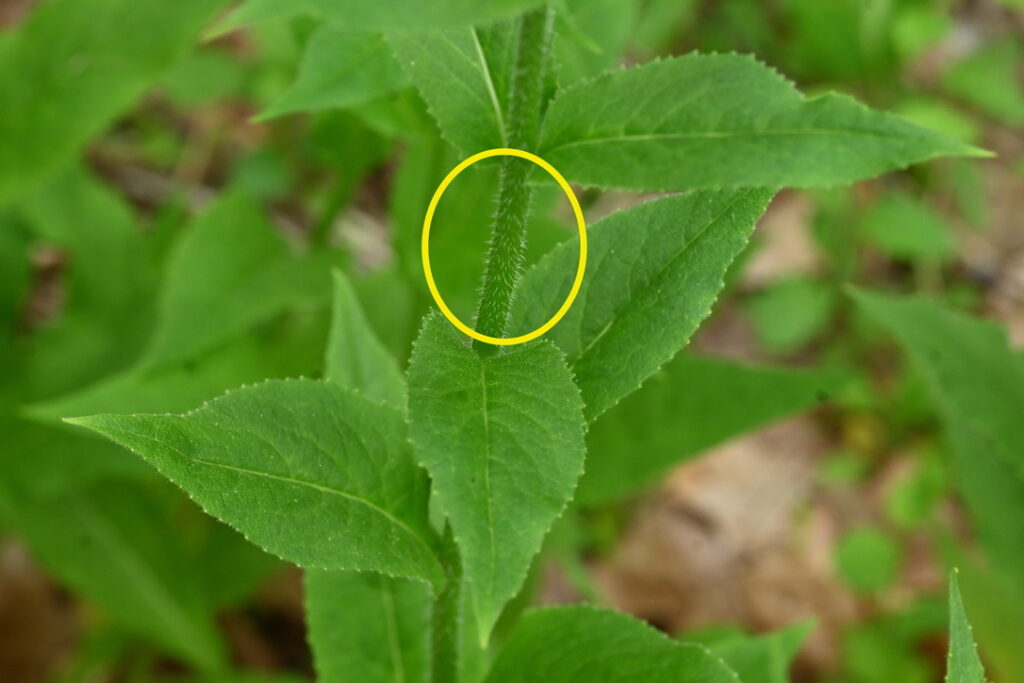
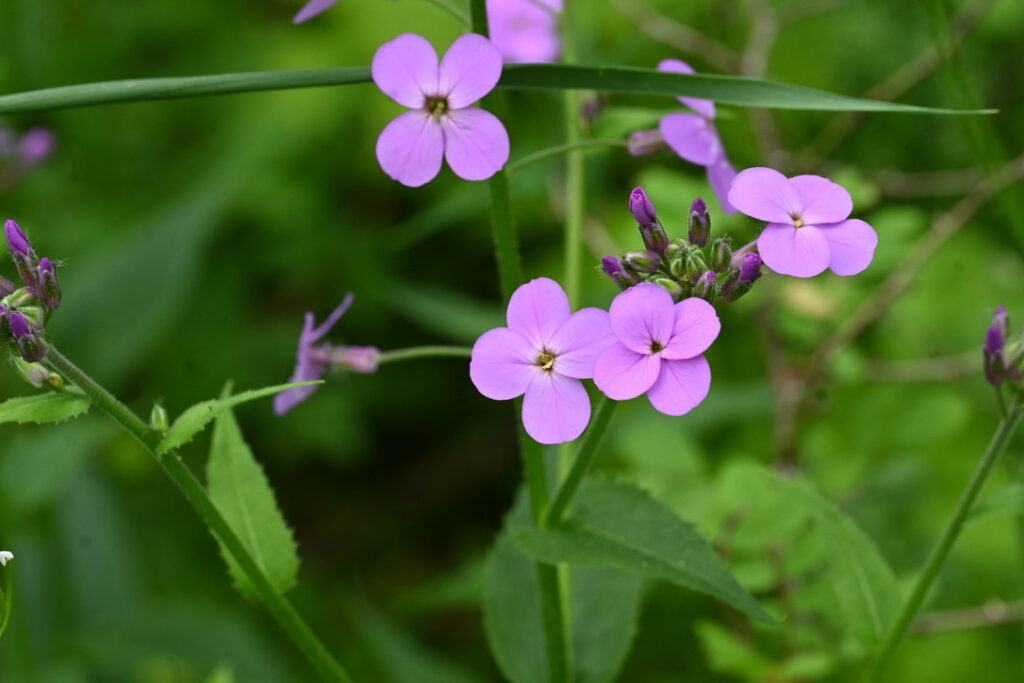
Photos: T. Maguire
Ecological Threat
Dame’s rocket behaves similarly to garlic mustard in its ability to prolifically reseed and monopolize wide areas of landscape if not controlled. Its ability to adapt to a wide variety of site conditions, including part-shade to full sun, open woodlands, roadsides, ditches, and meadows, ensures it is successful in reproducing. Whitetail deer typically avoid dame’s rocket, which allows it to outcompete ecologically beneficial plants.
Method of Spread
Dame’s rocket spreads by seed, with a single plant capable of producing thousands of seeds in a single season. Wildflower mixes and packets marketed to homeowners and landscapers as pollinator-friendly often include dame’s rocket, contributing to the plant’s spread.
Preferred Habitat
Dame’s rocket prefers well-drained, moist soil in semi-shaded areas. However, it is adaptable to almost any site condition, including full sun, clay soils, and drought.
Removal Methods
Plants can be pulled out similarly to garlic mustard, making sure to remove the entire taproot. Remove the plant before it goes to seed, preferably in the first year. Plants should be bagged if they are in bloom and disposed of in the garbage to prevent the spread of any seeds that may ripen afterwards. Since dame’s rocket seeds remain viable in the soil for many years, this task will need to be repeated until the seedbank is depleted.
For chemical control, a foliar application with a glyphosate-based herbicide is effective on the basal rosettes. A good application time is late fall or early winter when native plants are dormant. Always follow the herbicide label instructions; the label is the law.
If you are not able to or are not comfortable using herbicides, but have an invasive plant problem that needs attention, hire a landscape professional who has a NJ Department of Environmental Protection pesticide license and specializes in invasive plant management.
Native Alternatives
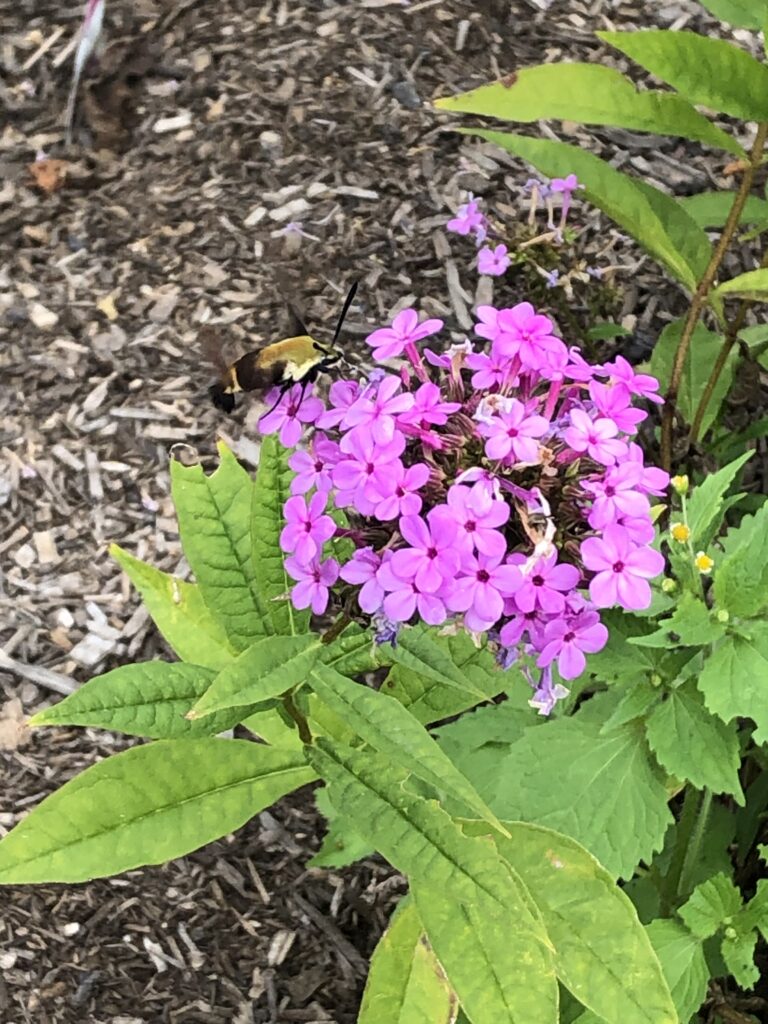
Photo: J. Epiphan
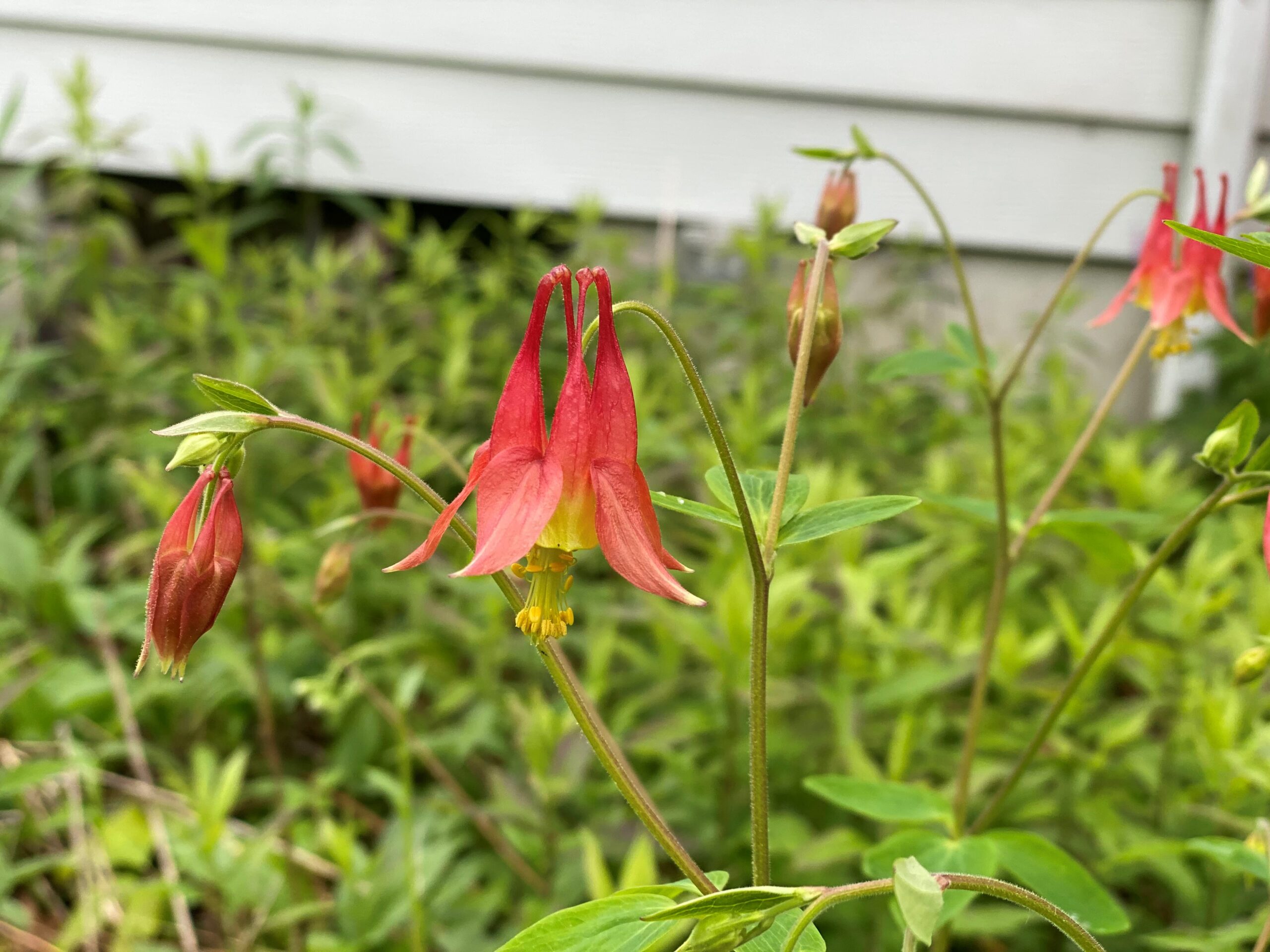
Photo: M. Bakacs

Photo: M. Bakacs
Summer phlox (Phlox paniculata) makes an excellent native alternative for garden settings, offering a similar upright form and abundant flower clusters reminiscent of dame’s rocket. Growing 2–4 feet tall, this sturdy perennial produces long-lasting blooms in a range of soft to vibrant hues, from pale pink to rich purple. Its fragrant, nectar-filled flowers attract butterflies, hummingbirds, and other pollinators, making it both a beautiful and wildlife-friendly addition to the summer garden.
Eastern columbine (Aquilegia canadensis) offers a striking alternative, with graceful 3‑foot stems topped by elegant, nodding red blossoms that persist over a long flowering season. These nectar-rich flowers are especially valuable for wildlife, attracting hummingbirds, butterflies, and bumblebees, making it both a visually appealing and ecologically beneficial addition to the garden.
Zizia (Zizia aurea) commonly known as golden alexanders, provides a cheerful burst of bright yellow, flat-topped flower clusters held above airy green foliage on upright stems about 1–3 feet tall. Blooming in late spring, it offers an important early nectar source for a wide range of pollinators, including native bees, butterflies, and beneficial insects. As a host plant for black swallowtail butterflies, Zizia is both a visually vibrant and ecologically valuable addition to naturalistic plantings and pollinator gardens.
Thank you to our reviewers: Roslyn Dvorin, Jean Epiphan, and Lynn Waclawski
References and Resources
- Penn State Cooperative Extension: https://extension.psu.edu/dames-rocket-give-this-lady-a-miss
- Invasive Plant Atlas of the United States: https://www.invasiveplantatlas.org/subject.cfm?sub=5702
- Wild Ones: https://wildones.org/dames-rocket-hesperis-matronalis/
- North Carolina State Extension: https://plants.ces.ncsu.edu/plants/phlox-divaricata/ https://plants.ces.ncsu.edu/plants/phlox-divaricata/
- Wisconsin Horticulture Division of Extension: https://hort.extension.wisc.edu/articles/dames-rocket/
The goal of Rutgers Cooperative Extension’s “Invasive Species of the Month” is to highlight those organisms that are non-native to New Jersey and cause economic or environmental harm, or harm to human health. We can all help prevent the spread of invasives by learning which species are a threat to our ecosystems.